
A story of ageing, illness, and compassion where family support has faded
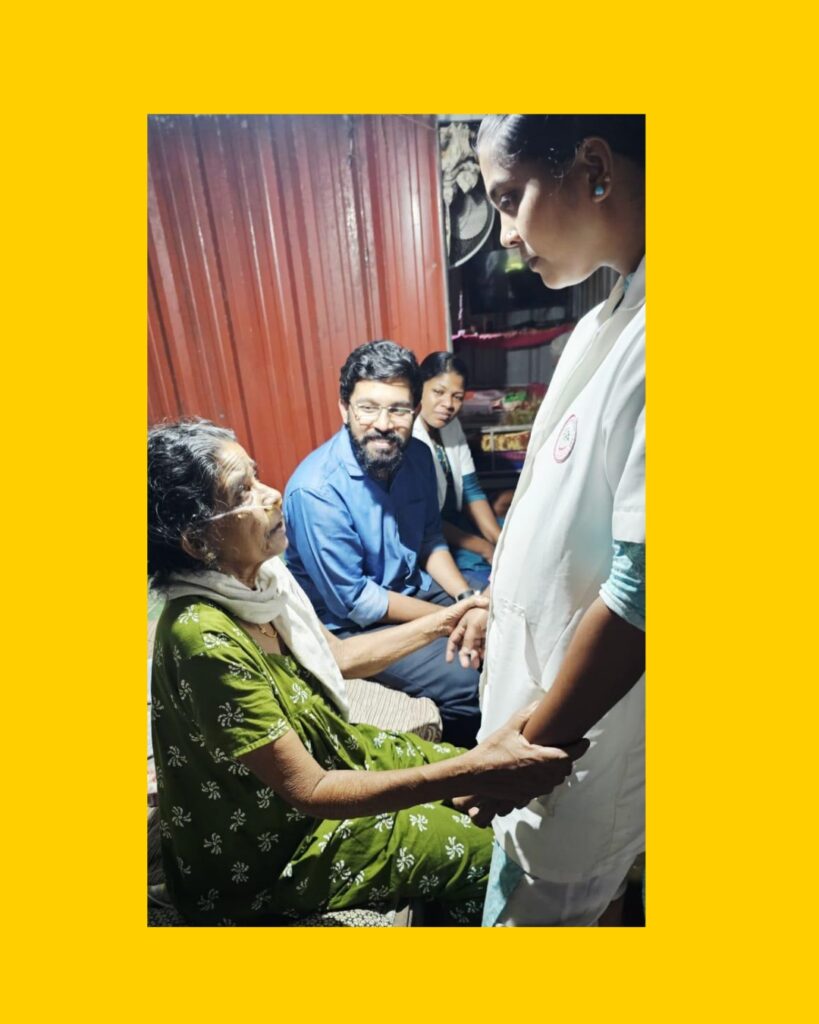
Every day brings a new story. Some are difficult to hear, not because they are unfamiliar, but because they reflect truths we often choose to look away from.
Kamalakshi Amma is 74. For the past five months, she has been under care, surviving with the support of an oxygen concentrator. Breathing is no longer effortless. Warmth is no longer guaranteed. Care, for her, has become a lifeline.
She lives in a small home covered with plastic sheets, sharing the space with her husband and daughter. During the floods, the house filled with cold water. Amma was found shivering inside, while her husband cooked rice on a makeshift stove outside. Nearby stood a large, warm house; the home of their son, unmoved by the suffering unfolding next door.
“This is not a story about blame”.
It is a story about abandonment, loneliness, and the fragile reality many elderly people face in silence. Though Amma has children, care did not come easily. One daughter, herself a widow with two children, tried to support her mother but was forced to choose between caregiving and survival.
Joy of Helping (JOH) stands with elders like Kamalakshi Amma, for whom care is not temporary relief but an ongoing necessity. Through long-term, compassionate support, JOH ensures that dignity does not disappear with age, illness, or dependence.
Some real-life stories hurt more than films. They remind us that ageing, without care, becomes isolation. And that compassion, when extended consistently, becomes survival.